Fun Facts About Badlands National Park

Here are some fun facts about Badlands National Park to help you get to know the Park a little better before you visit.
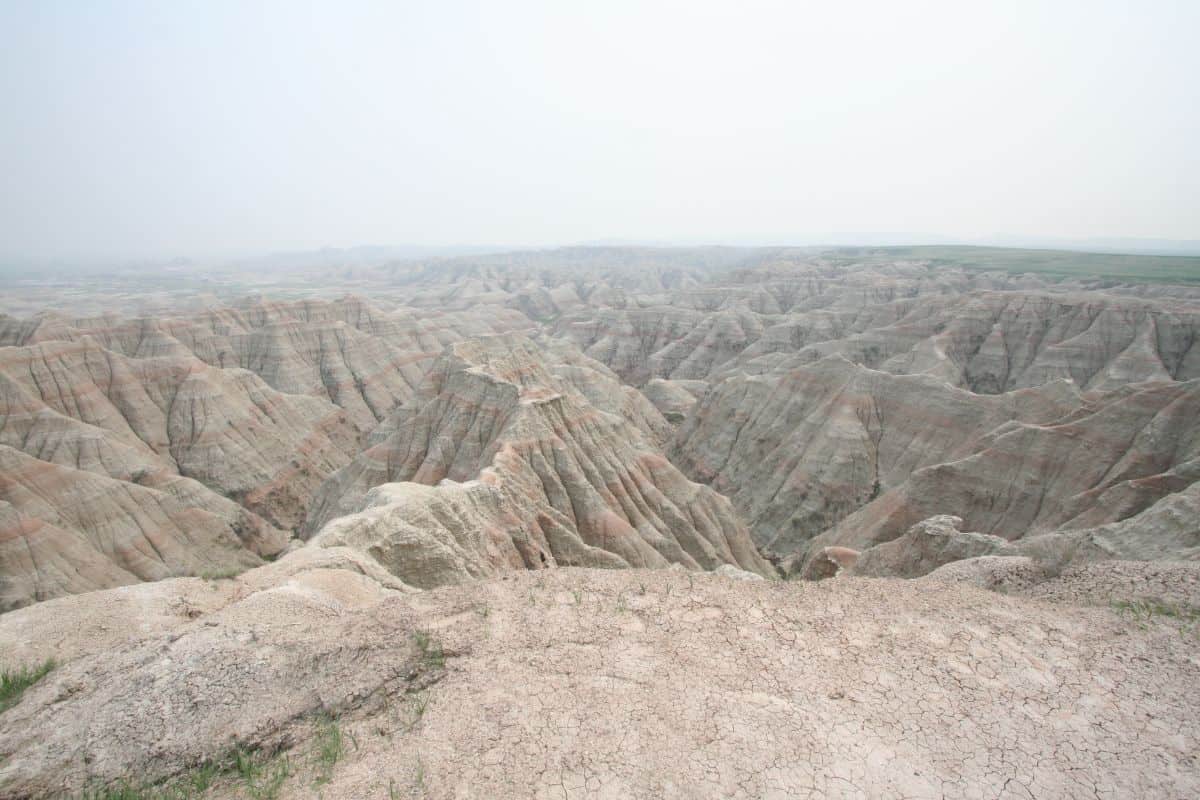
More than 1.1 million guests visited the Badlands in 2025
Toward the end of the first quarter of the year, the United States National Park Service releases data on the recreational visits to all park units for the previous calendar year. About 1.1 million guests explored Badlands National Park in 2025.
That number was good enough for a rank of 26th place out of the 63 parks for recreation visits. For comparison, the most visited park (Great Smoky Mountains) saw 11.5 million visitors in 2025.
It’s the 28th-largest national park by land area
Badlands National Park’s 242,700 acres put it in the top half of U.S. National Parks when ranked by size.
The biggest National Park is Wrangel-St. Elias, and it’s more than 13 million acres. The smallest National Park is Gateway Arch in St. Louis, which sits on only 192 acres.
It’s very easy to navigate
The park has one major road that runs through the North Unit (main unit) of the park. Nearly all of the park’s scenic overlooks are on the Badlands Loop Road; you can’t miss it. Also along this road are the park’s trailheads and the main Visitor Center.
Some of the hills are yellow!
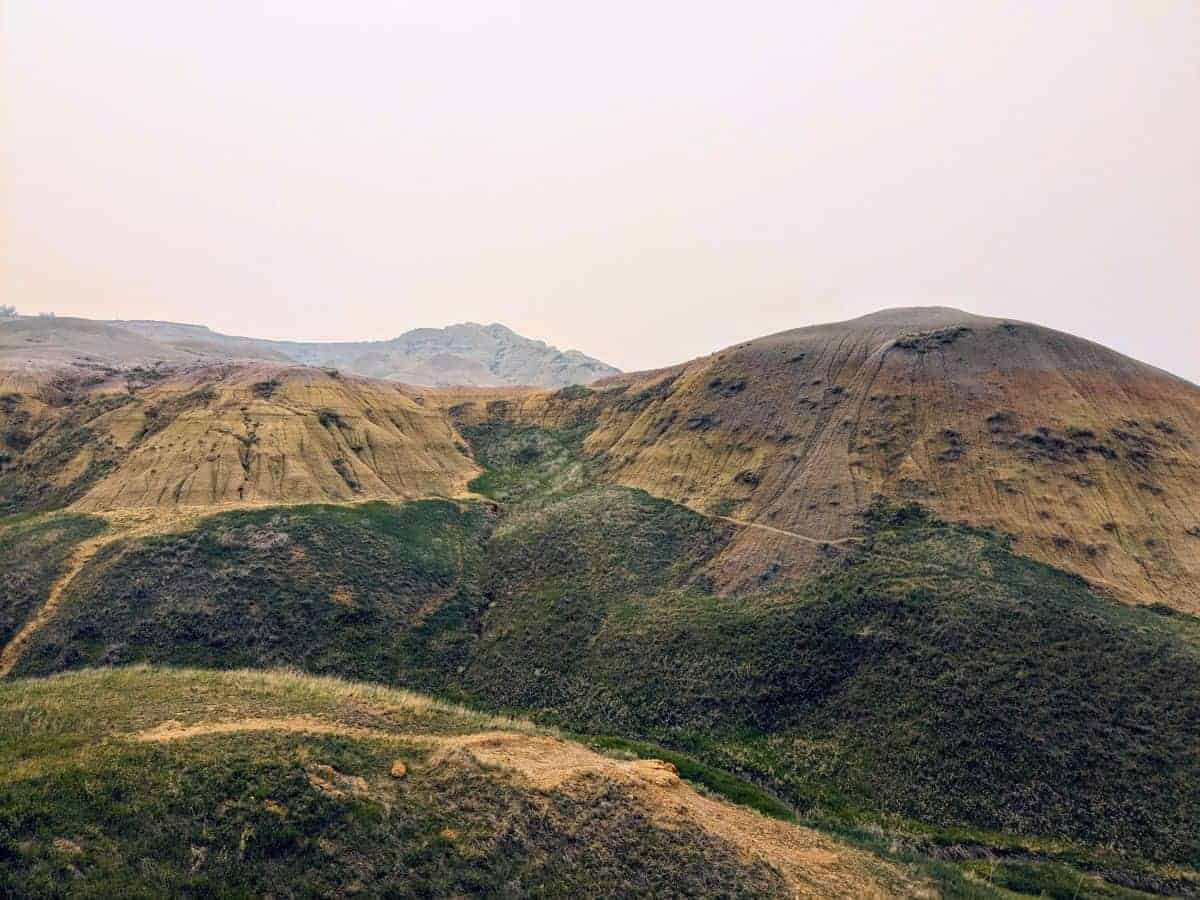
At Yellow Mounds Overlook, you get to see some of the most colorful of the Badlands rock formations, showing off their yellow and purple.
The Notch Trail includes a log ladder climb
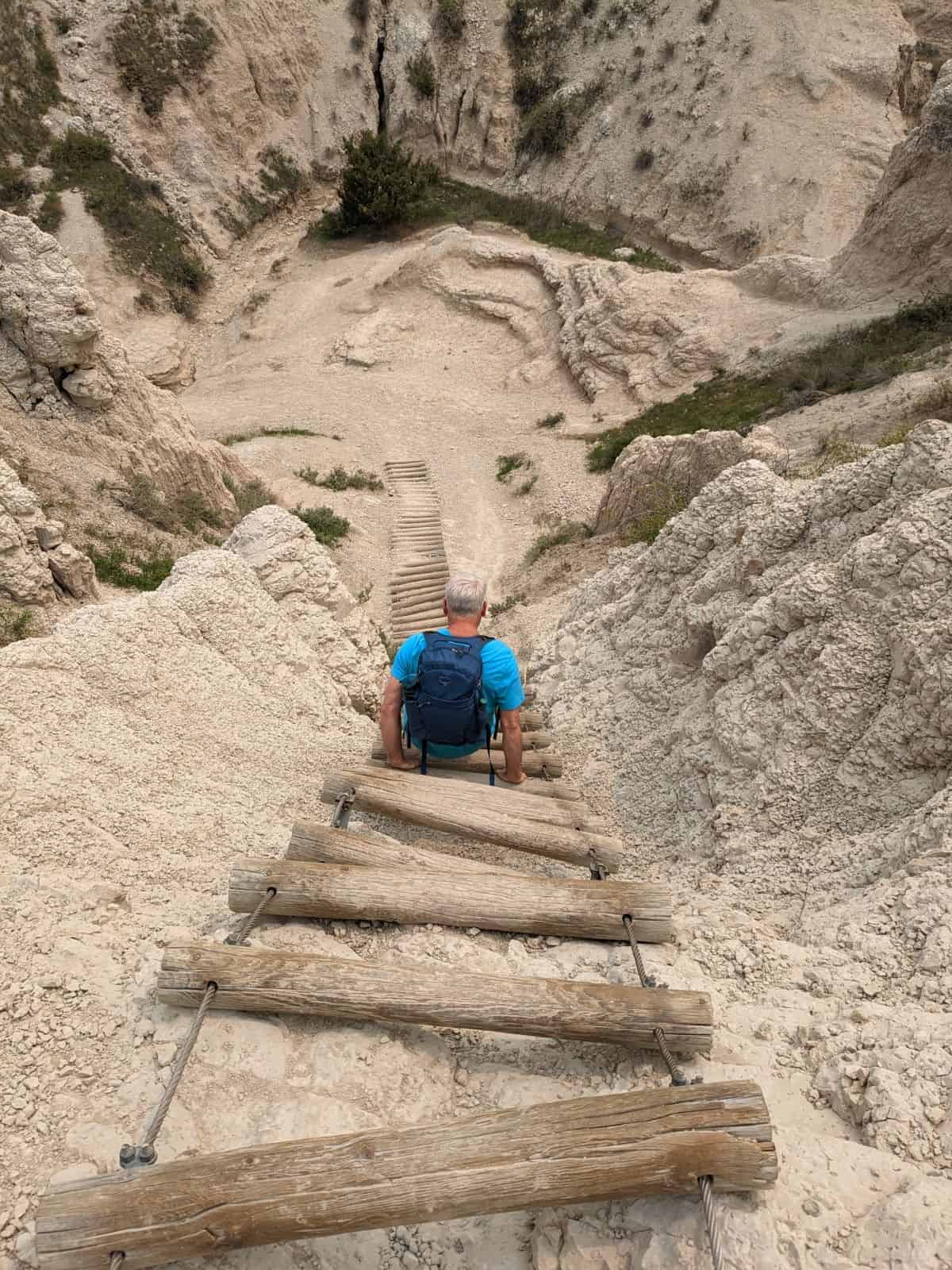
Badlands National Park includes some great short hikes. The most popular by far is Notch Trail. One of the things that makes this trail unique is its log-ladder climb.
While I’m generally not a big fan of ladders, I was determined to try this hike, and didn’t mind the ladder. The key is to just keep climbing. On the way down, we took it slower than going up.
Badlands National Park is an open-hike park
Open hiking in Badlands means that you are allowed to hike off-trail. They just ask that you exercise caution. There is wildlife in the park, including rattlesnakes, and they don’t have unlimited staff to help you down from those rock formations that you may have found easier to climb up.
The Visitor Center is named for the first Lakota member of the U.S. Congress
The Badlands National Park Visitor Center is named after Ben Reifel, who was Sicangu Lakota and born on the Rosebud Indian Reservation in South Dakota. He was the first person of Lakota or Sioux descent to serve in the U.S. Congress. He earned a PhD from Harvard University.
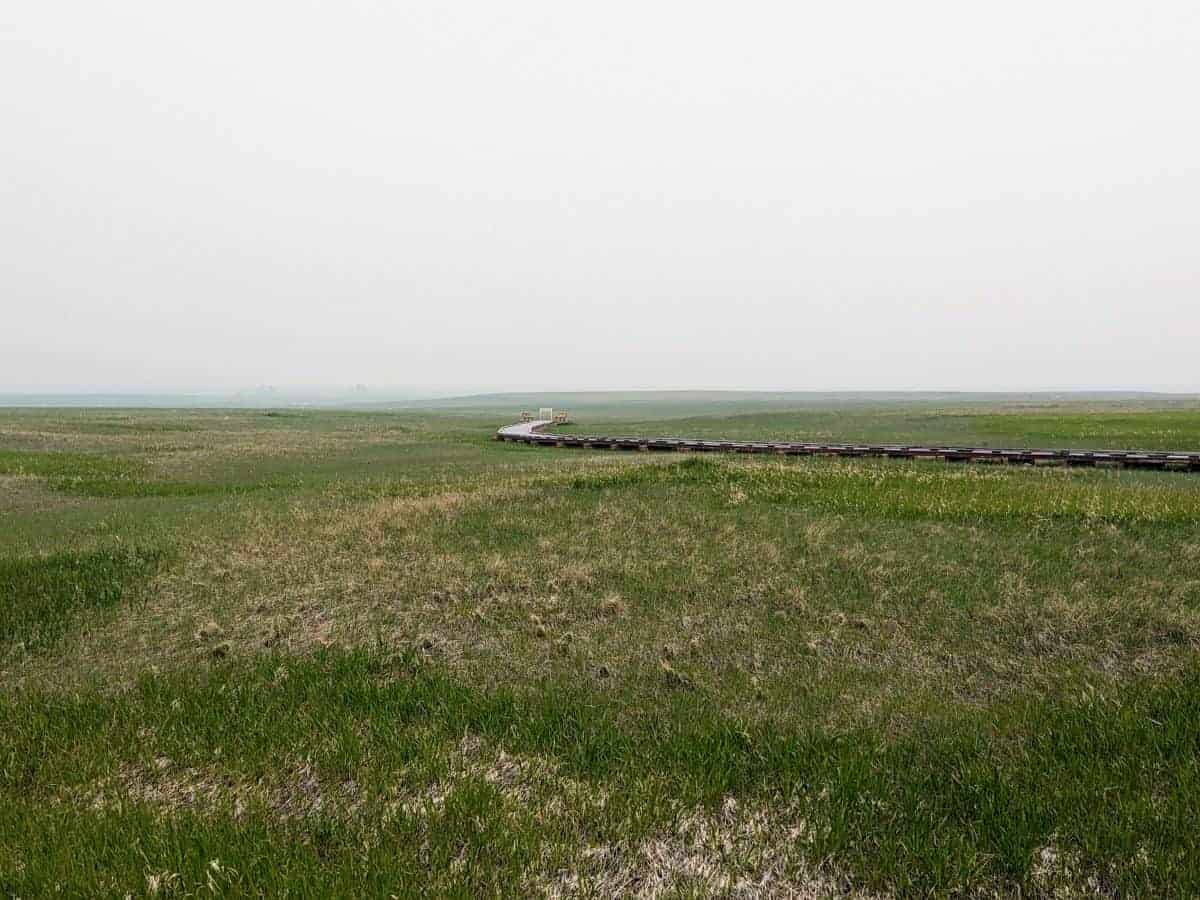
It protects the largest remaining tract of mixed grass prairie in the United States
You’ll find it at the Prairie Overlook. I found this overlook rather stunning. And it’s unlike any of the others because you’re not venturing out to the edge of a valley of rock formations.
Instead, you’re walking a boardwalk that takes you out over utterly flat mixed-grass prairie, so that you can see just a tiny taste of what the prairie’s earliest settlers looked at every day of their lives.
And there is so little actual prairie environment left. It’s so important to protect.
It includes a Prairie Dog Town
Roberts Prairie Dog Town is located on Sagecreek Rim Road near the Pinnacles entrance (near Wall, South Dakota), and it’s also the largest prairie dog town in the accessible parts of Badlands National Park.
Keep your distance, but spend a few minutes just watching, and you might find yourself having a good chuckle over their “barking,” running, and jumping. Wait long enough, and you might get to see some prairie dog kisses.
Keep your distance, because prairie dogs can carry the plague. And, no, I am not making that up. Like…the actual plague.
The bottom line
I hope you have a great time on your trip to Badlands National Park. It’s one of my favorites. If you want to try off-trail hiking, maybe check out the Yellow Mounds Overlook. Judging by the well-worn paths there, it seems to be a popular place to try it.