Fun Facts About Great Smoky Mountains National Park

Here are some fun facts about Great Smoky Mountains National Park to help you get to know the Park a little better before your trip.
This post includes affiliate links. If you make a purchase through one of these links, I may earn a small commission at no additional cost to you. As an Amazon Associate, I earn from qualifying purchases. See disclaimer.
It was the most popular National Park in 2025
Toward the end of the first quarter of the year, the United States National Park Service releases data on the recreational visits to the units they oversee for the previous calendar year. In 2025, Great Smoky Mountains National Park was the most visited of all National Parks (and has been for many years).
This ranking is out of the list of 63 National Parks, not the full list of all 433 individual units overseen by the National Park Service. Great Smoky Mountains National Park ranked #3 out of all 433 park types in 2025. Only the Blue Ridge Parkway and the Golden Gate National Recreation Area saw more visitors.
It’s the 19th largest National Park by land area at 522,000 acres
Although Great Smoky Mountains is the most popular National Park, it’s barely in the top 20 for land area. It ranks only at number 19 out of 63 National Parks for land area, at about 522,000 acres, with that being split almost evenly between Tennessee and North Carolina.
The biggest National Park is Alaska’s Wrangel-St. Elias with more than 13 million acres.
It includes the highest point in Tennessee
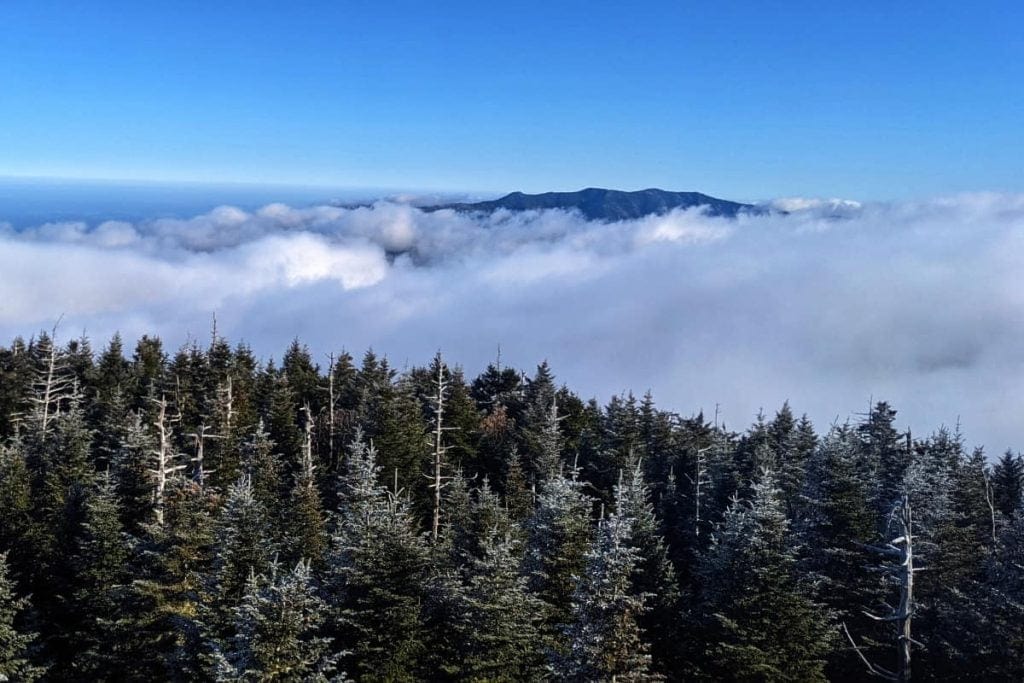
Kuwohi (formerly known as Clingmans Dome) is the highest point in the Park at 6,643 feet. It’s also the highest point in Tennessee and the third-highest point east of the Mississippi River.
You can hike up a steep 0.5-mile paved path to the observation tower to enjoy the amazing view, but please be aware that parking is limited and the Kuwohi Road is closed during the winter.
The Park is free to enter, but you have to pay to park
Entrance to Great Smoky Mountains National Park is free, and it’s open 24 hours a day all year round. However, back in 2023, the Park implemented a parking fee system that requires a paid permit for parking longer than 15 minutes.
There are a number of places you can buy daily, weekly, and annual parking permits in person and through automated kiosks, or you can purchase online through recreation.gov.
👉 Keep track of all your trip details with the Plug-and-Play Travel Planning Toolkit.
They hold a lottery to view the fireflies each year
The Elkmont area is home to synchronous fireflies that come out each year in late May/early June. Because viewing these fireflies became so popular, the National Park Service implemented a lottery system through the recreation.gov website to limit the number of guests allowed to enter the viewing area.
South Carolina’s Congaree National Park has a similar synchronous firefly lottery each year.
The park includes only 1 lodge…and it’s quite remote
There are no lodges or inns in Great Smoky Mountains National Park. LeConte Lodge is only accessible on foot after hiking at least 5 miles. It’s also the highest guest lodge in the Eastern U.S.
The Park also includes 10 campgrounds, not including backcountry camping options. Fortunately, there are many great options for staying in towns outside the Park.
Great Smoky Mountains National Park includes 384 miles of road
Auto touring is one of the great things to do in Great Smoky Mountains National Park. Don’t miss the 11-mile loop through Cades Cove or the 5.5-mile Roaring Fork Motor Trail. Even just the drive through the park from the North Carolina side to the Tennessee side is full of amazing scenic views you won’t want to miss.
Tour the park like an expert with the GuideAlong Great Smoky Mountains National Park Tour.
There are more than 800 miles of hiking trails
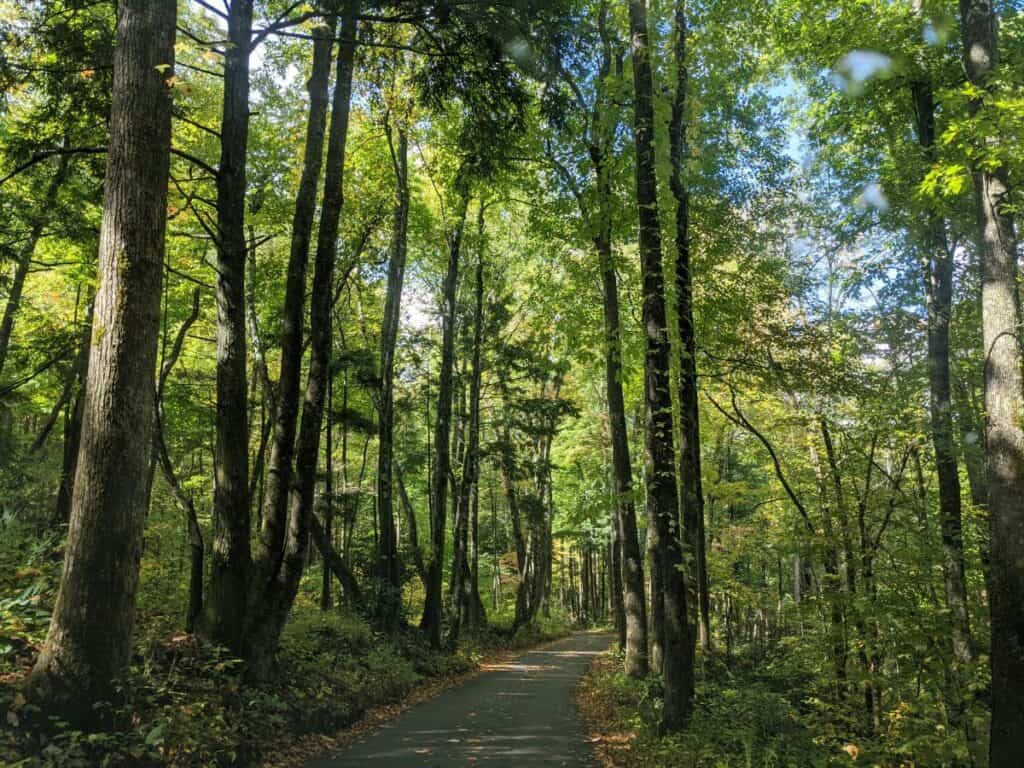
Great Smoky Mountains National Park is home to more than 150 official hiking trails, from short, easy, kid-friendly hikes to quite long hikes requiring significant hiking experience.
Here are a few of the most popular hikes in the Park.
- Rainbow Falls, 5.4 miles, moderate
- Alum Cave Bluffs, 2.5 miles one way
- Abrams Falls, 5 miles round-trip, moderate to difficult
- Grotto Falls, 3 miles round-trip, moderate
- Kuwohi, 1 mile round-trip, moderate to strenuous
The Appalachian Trail runs through Great Smoky Mountains National Park
Approximately 71 miles of the Appalachian Trail run through Great Smoky Mountains National Park. If you want to get a taste of it, while you’re there, you can hop on in the Kuwohi & Newfound Gap Area.
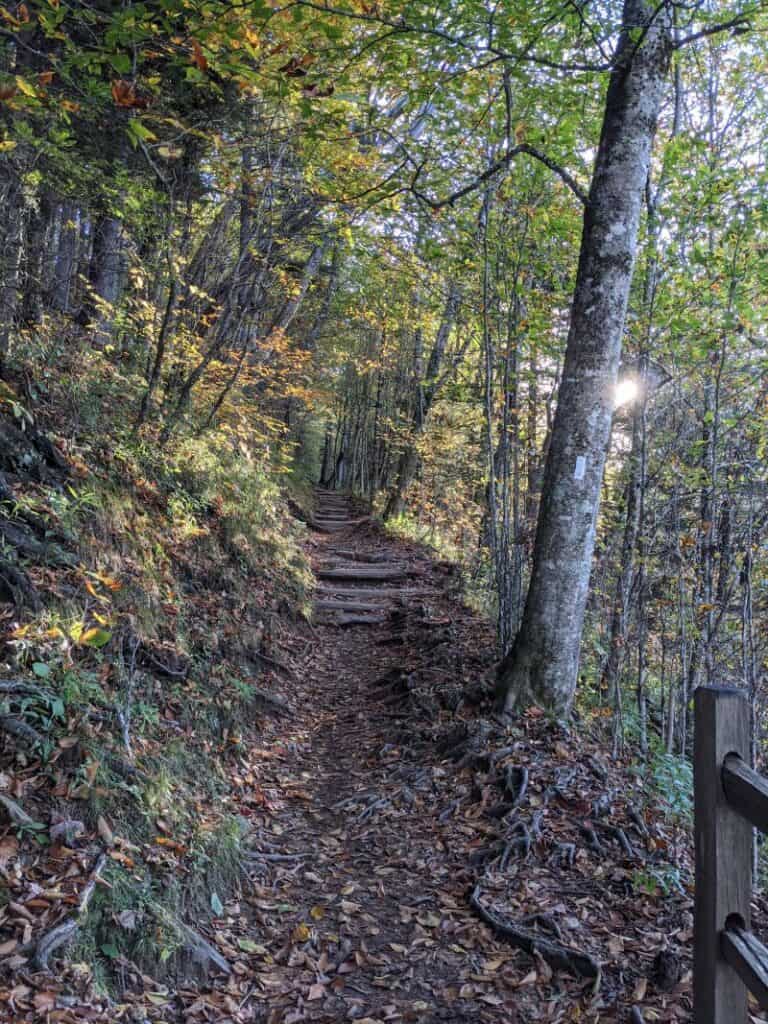
It was designated a World Heritage Site in 1983
Great Smoky Mountains National Park was designated a UNESCO World Heritage site in 1983.
The official listing states: “The park is of exceptional natural beauty with undisturbed, virgin forest including the largest block of virgin red spruce remaining on earth…At over 209,000 hectares, the property is one of the largest intact forest ecosystems in the southern Appalachian mountains, and contains one of the largest blocks of deciduous, temperate, old growth forests remaining in North America.”
TRAVEL TIP: If you have flexible travel dates, you need to check out Going (formerly Scott’s Cheap Flights). You get amazing flight deals sent straight to your inbox with instructions on how to book directly with the airlines. Check out Going here. Going is my favorite way to find great travel deals.
The bottom line
Great Smoky Mountains National Park has so much to offer, whether you’re there to hike Kuwohi, catch a glimpse of synchronous fireflies, or simply enjoy a scenic drive. It’s one of those places that keeps drawing people back year after year. It’s easy to see why it’s been the most visited National Park for so many years running!