How to Pack for 2 Weeks in a Carry-on

I’m going to let you in on a little secret right from the beginning.
I pack for two weeks in a carry-on in almost exactly the same way as I pack for one week in a carry-on. Keep reading. I’ll explain everything.
This post includes affiliate links. If you make a purchase through one of these links, I may earn a small commission at no additional cost to you. As an Amazon Associate, I earn from qualifying purchases. See disclaimer.
Getting organized
Traveling carry-on only means you need to be organized. That means a good packing list.
Some people like to break down their packing list by the type of item they’re packing. So, toiletries, clothing, tech, etc. I organize a little differently.
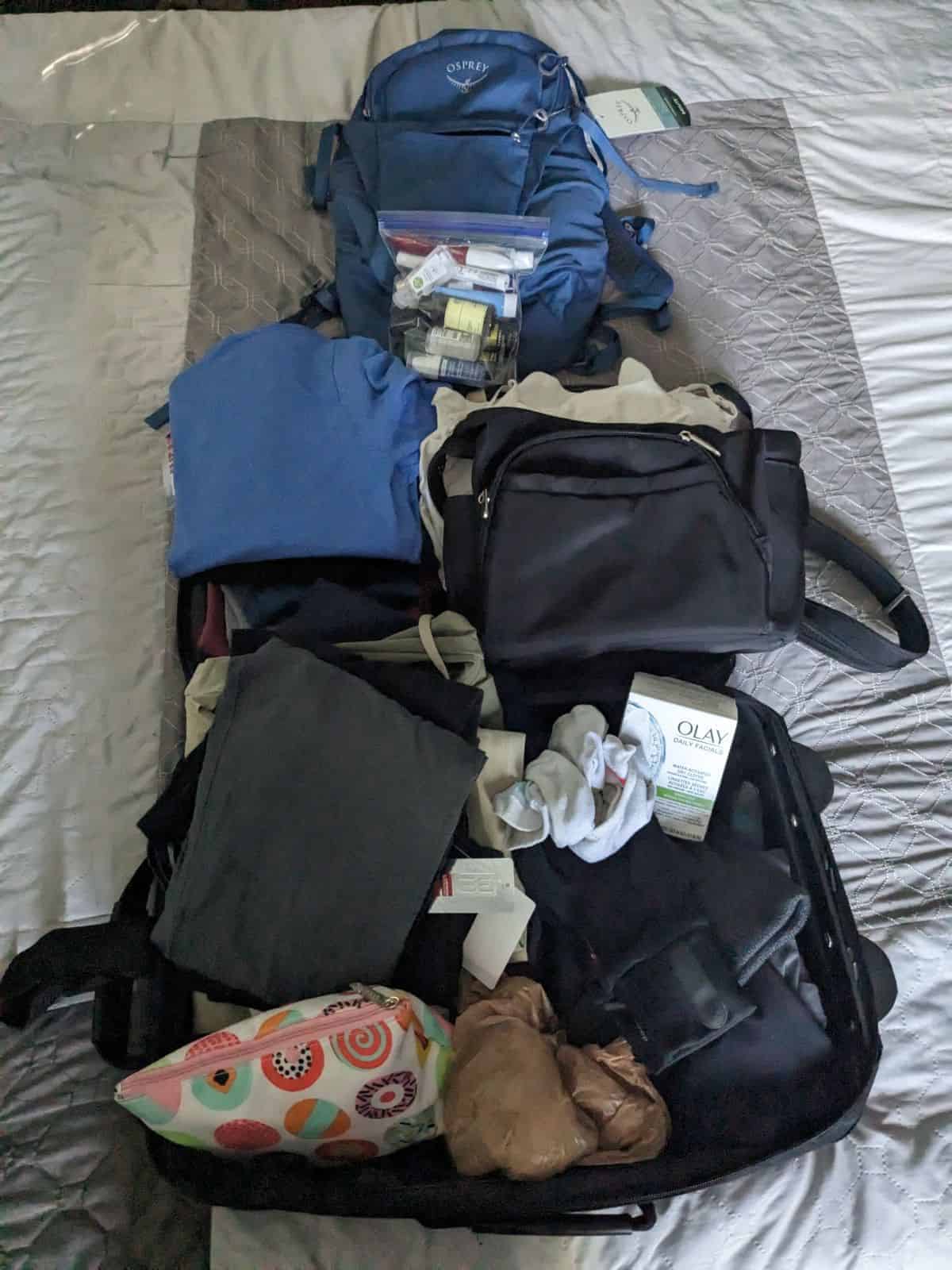
- What I’m wearing on the plane
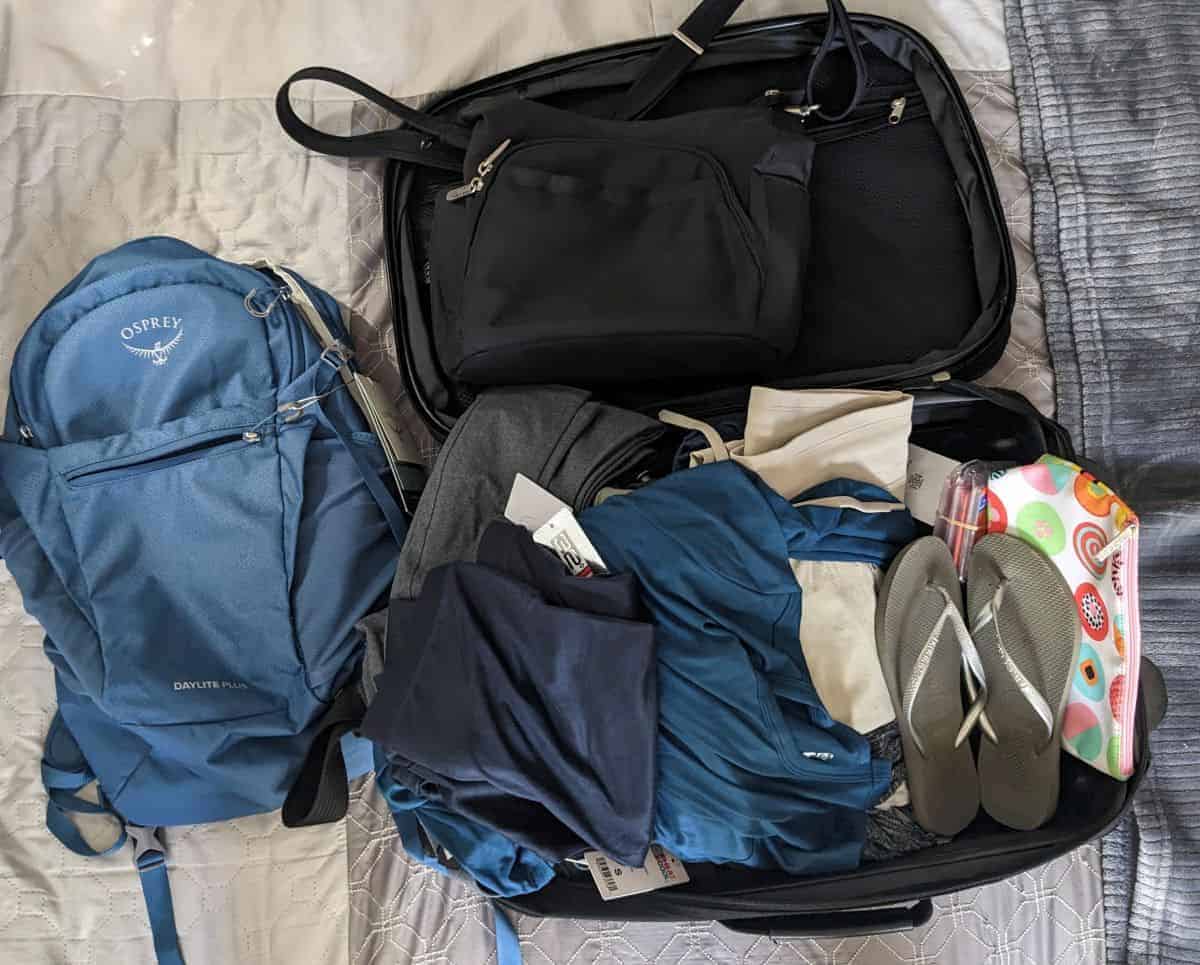
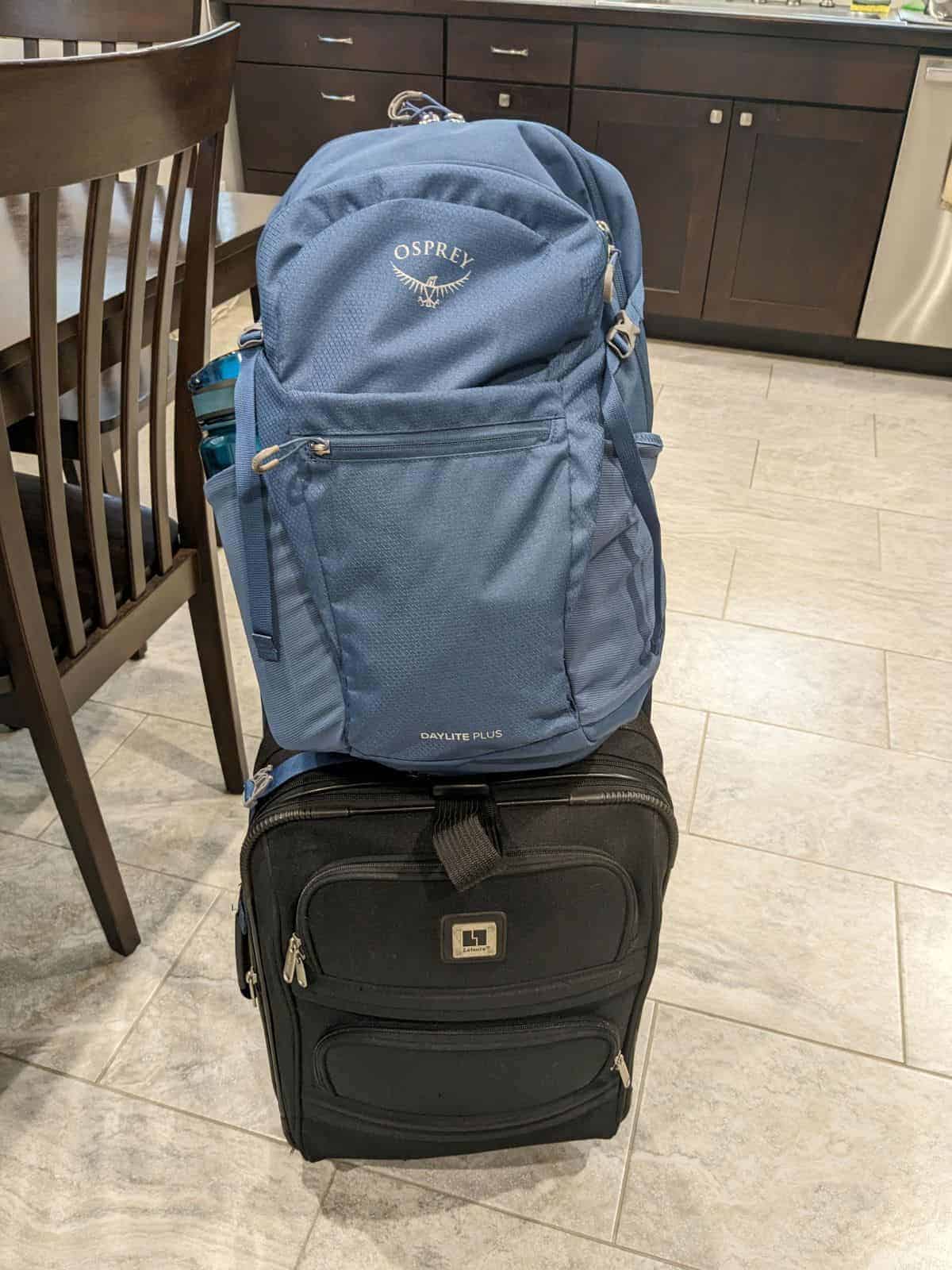
- What I’m packing in my rolling carry-on bag
- What I’m packing in my personal item (most often this is a backpack)
- What’s going in my TSA 3-1-1 liquids bag
By focusing on the way each thing I pack is going to get through security and then on the plane, I can maximize the space I have.
Because traveling carry-on only means I have very little space to pack liquid toiletries, those get their own category on my packing lists so I can be careful and not exceed my limit.
Handling toiletries
Remember to have all liquids and gels packed separately in a clear, 1-quart bag (a basic plastic bag is fine) when you go through security.
No container in your 1-quart bag can be any larger than 3.4 ounces, regardless of how little is inside that container. If you have specific questions about what can or cannot go in your carry-on, check out the TSA website.
I have an entire post dedicated to just the topic of packing toiletries for carry-on only travel.
For a two-week trip, understand that you will likely need to plan to buy some things at your destination, things likely easily located and affordable to purchase at your destination, such as sunscreen, insect repellent, some hair care products, hand sanitizer, etc.
Plan to reserve your 3-1-1 bag for those things you won’t be able to easily find at your destination: your favorite mascara, your expensive skin care treatment, etc.
Dealing with the weather
To handle the weather when packing carry-on only, I’ve come up with a layering system that works really well for me. You’ll figure out what works best for you as you gain more experience traveling with carry-on luggage only.
Start your weather planning well in advance. As you’re building your packing list, research the typical weather for your destination during the time that you’re going to be traveling there. This is just to give you a big picture idea of what the weather there is typically like.
Once you’re within about 10 days of your departure for your trip, start watching the actual forecast and making adjustments as you need to. This two-phase sort of approach will help you prevent overplanning and overpacking, as well as help you avoid last-minute panic.
What I do is I work with three clothing layers maximum, sort of. (Disclaimer: this is the basic plan, but I adjust this depending on the overall weather at my destination.)
This is my starting place, but I adjust from here depending on the overall weather where I’m going and the planned activities I have.
Layering garments
Layering system for tops:
- I pack at least one base layer made with a moisture-wicking fabric like merino wool, a synthetic blend…something that works well for warmer or cooler temperatures.
- The mid layer is something I can easily add or remove: a light cardigan, a long-sleeve button-up shirt, a thin cotton or wool sweater, or a light fleece could also work. The key is it’s something that’s versatile as well as something that’s easy to take on and off.
- The outer layer is one versatile outerwear piece that handles wind, rain, and temperature drops.
I love traveling with a three-in-one fleece interchange coat. It’s a waterproof outer layer with a thermal fleece lining that zips out. Both parts can be worn separately or together.
How this layering system works on the bottom is that when going places with potentially large temperature fluctuations, I will pack at least one base-layer bottom to wear under my pants as needed.
What if the weather forecast is wrong?
What if the weather forecast is wrong, or when you travel to your destination, you experience unseasonably warm, cold, or wet weather, because the forecast was wrong? Hey, it happens!
What I’ve learned is that weather emergencies are rarely actual emergencies. If you’ve packed well, you will have some things on hand to keep you warm enough and dry enough, most likely.
If not, most destinations have stores where locals buy weather-appropriate clothing. If you really need something, you can find it.
Follow the “1-week Rule”
So here’s the rule. And this is just a suggestion, but it works great for me: pack for 1 week maximum, regardless of how long you’re actually traveling. Whether you’re gone for seven days or four weeks, you’re packing the same amount of clothing.
If you tie this in with my suggestion (below) that you do a little laundry when you travel, packing for two weeks in a carry-on starts to seem easier and easier.
Following the 1-Week Rule shifts your mindset from packing for each day to packing strategically and reusing. You’re not depriving yourself; you’re being smart about how you use the small amount of available space.
To help with this, you can reduce the number of individual garments that you pack by bringing things that coordinate well in multiple combinations. So instead of packing seven complete separate outfits for a week (and you probably wouldn’t have room for that anyway), think about pieces that work together, a pair of pants that goes with three different tops, a cardigan that works over multiple dresses or outfits, or with several shirt and pant combinations, shoes that complement most or all of your outfits, etc.
You’re maximizing the number of outfits while you’re minimizing the number of individual things that you’re packing.
Instead of thinking of the 1-week Rule as restrictive, it’s actually really liberating because it means that a seven-day trip and a four-week trip require the same size suitcase and the same amount of time spent packing.
Do laundry while you travel
Now, stick with me here, because I don’t want to do laundry when I travel, but I also don’t want to pay ridiculous checked luggage fees. So I compromise with myself, and I do a little laundry when I travel, so I can travel carry-on only.
If you pack with the intention of minimizing laundry, choosing fabrics that pack well and can hold up to multiple wears, bring a few laundry detergent sheets with you (or purchase a few supplies at your destination), you can easily make this work for you.
Check out my post on how we handle doing laundry when we travel.
You can’t pack for every scenario
It’s so tempting when packing to let the “what ifs” creep in. What if it’s colder than expected? What if it’s warmer? What if I need something dressy? What if I spill something? What if I want to exercise?
Before you know it, you’re packing for 17 different versions of your trip, none of which will probably happen exactly as you imagine. And the next thing you know, you’ve convinced yourself that you need to pack a larger suitcase for all these imagined scenarios.
Here’s what I want you to focus on instead: What do you actually know you need for your trip?
Not the trip where you accidentally get invited to a fancy dinner every night. Not the trip where the weather is completely different from what you researched. The trip where you do mostly what you plan to do, wear mostly what you usually wear when you travel, and need mostly what you usually need.
Pack for that trip. And then trust that you can adapt if needed.
Because you can’t plan for every scenario and fit that into any size suitcase anyway. You can’t plan for every eventuality.
Stick to the plan.
My free packing list template
To get started on packing for your next two-week trip with just a carry-on, grab my free packing list template.
It’s based on my 1-week carry-on packing list, so it’s perfect for following the 1-week rule we discussed earlier in this post.